


Checked: 8 October 2026
A first Emirati meal can begin with a pancake that arrives with date syrup and cheese, or with sweet vermicelli finished with an omelette. Later, the table might turn to fragrant rice, a slow-cooked wheat-and-meat dish, or a stew that softens the bread beneath it. The pleasure is in noticing how different the dishes feel from one another—not trying to order every unfamiliar name at once.
Here’s a useful way into the menu: choose one bread or breakfast dish, one savoury centrepiece, and a sweet or coffee to finish. If you are sharing, pick contrasting textures. If you are ordering just for yourself, begin with the dish whose description sounds most appealing; the names become much easier to remember once you know what each one brings to the table.
Start with the kind of meal you want
- A breakfast spread: balaleet, chebab or khameer, with cheese, date syrup and a few savoury sides.
- A rice-centred lunch: chicken, fish or lamb machboos.
- A softer, slow-cooked main: harees, made with wheat and meat, or thareed, where broth and stew meet torn bread.
- A little of several dishes: ask whether the restaurant has a tasting tray or Emirati set; portions and sharing sizes differ by menu.
- A sweet finish: luqaimat with date syrup, then gahwa (Arabic coffee) if you would like to try the traditional pairing with dates.
The dishes served and the way they are prepared can vary between families and restaurants. Think of these descriptions as a menu guide, not a rulebook for every Emirati table.
If you’re going for breakfast: order balaleet with a bread
Balaleet is the sweet-and-savoury surprise to look for: fine vermicelli scented with spices such as cardamom and cinnamon, topped with an omelette. At Arabian Tea House, its main online menu lists balaleet with omelette at AED33 and a Special Emirati Breakfast Tray at AED85. The tray brings balaleet, date molasses, cheeses, beans, dango and bajella together with traditional bread. There is a small menu wrinkle: the restaurant’s separate breakfast page still lists the dish at AED36 and the tray at AED89. Check the live price when ordering. The tray makes the contrasts easy to see at once: sweet vermicelli, date molasses, cheese, beans and soft breads.
Add chebab if you want something pancake-like. It is an Emirati bread/pancake commonly served at breakfast; Arabian Tea House offers it with Kraft cheese and honey or date molasses. Khameer is a more substantial baked bread, also served there with cheese and date syrup. For something thin and crisp, look for raqaq; the restaurant’s menu lists versions filled with egg and cheese, cheese and honey, or mashawa (fish sauce).
If breakfast menus are unfamiliar, ask for the bread and sweet vermicelli to share. That gives you a clear comparison without turning the table into a parade of full-size dishes.
For the main event, choose rice or slow-cooked comfort
Machboos: the aromatic rice plate
Choose machboos when you want the most direct route to a substantial rice meal. It is made in versions with chicken, fish or meat; Visit Dubai’s description of chicken machboos highlights chicken cooked with tomatoes, onions and herbs and served with basmati rice. The official UAE food guide also notes spiced fish dishes such as machboos, reflecting the coastal side of Emirati food traditions.
It is a good one-dish order if you want rice and protein together. Ask whether the version on today’s menu is chicken, fish or lamb, and whether it comes with a sauce or side. At Arabian Tea House, for example, the current menu lists Chicken Machboos at AED62. That is a menu listing, not a citywide benchmark; check the live menu for the exact portion and final bill.
Harees: wheat cooked down until soft
Harees brings wheat and meat together through long, slow cooking until the grains and meat become soft and cohesive. Its texture is closer to a savoury porridge than a separate piece of meat beside rice. The official UAE food guide connects harees with occasions including Ramadan and celebrations, although it is not only available during those periods: Gerbou currently lists Lamb Harees at AED80.
Choose it if you are curious about a dish built around patience and texture rather than a mound of rice. If you are unsure, ask whether the restaurant serves it as a main or as part of a sharing selection; menus do not always make portion size clear.
Thareed: stew and bread in the same bite
With thareed, pieces of thin Emirati bread soak up a meat-and-vegetable broth, then the meat or chicken is served over the top. The bread is part of the dish, not an optional side. It makes a satisfying choice when you want the comfort of a stew and do not need a separate rice plate.
Spelling varies: you may see thareed, thareeth or tharead. Gerbou lists Lamb Tharead at AED90. Ask whether the bread is already layered into the dish and which meat is being served; those details can differ from one kitchen to another.
Madrooba: ask how this kitchen makes it
Madrooba is a thick, slow-cooked dish, and menus show both chicken and fish versions. The UAE government’s food guide describes the fish preparation with salted fish, spices and a thick sauce; current Emirati menus in Dubai also list chicken madrooba. Ask which version the kitchen is serving and how it is made rather than expecting one fixed recipe.
Leave a little room for luqaimat and gahwa
Luqaimat are small fried dough dumplings: crisp at the edges, soft inside, and usually finished with date syrup or honey. They are a natural dessert to share after a main meal. Some Dubai menus use the spelling logaimat; look for the dish description as well as the name. Gerbou currently lists Logaimat at AED35.
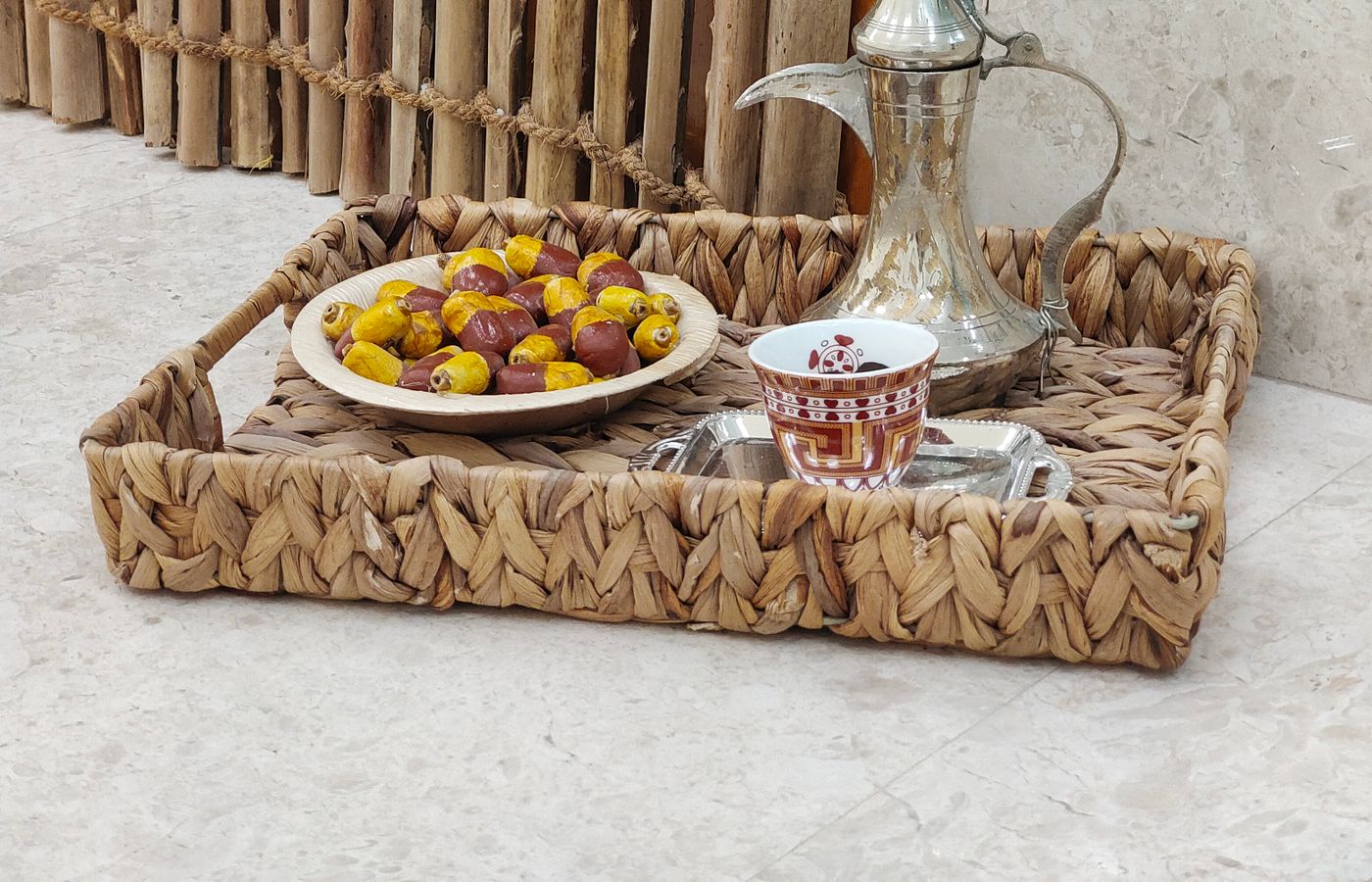
Gahwa, Arabic coffee, is commonly served in small cups and often flavoured with cardamom and saffron. Dates are a familiar accompaniment. You do not need to know a formal sequence to enjoy it: if it is offered, take a small cup and ask about the roast or spice if you are curious. Karak is delicious and widely available in Dubai, but it is a spiced tea with a different history; it is not another name for gahwa.
A simple first order for one, two or a group
- Dining solo: choose one main—machboos for rice, harees for a softer texture, or thareed for bread soaked in stew. Add luqaimat if you want dessert.
- Two people: share balaleet or a bread at breakfast; for lunch, choose one rice dish and one slower-cooked dish so the textures contrast. Ask the server whether the listed dishes are suitable for sharing.
- A group: order a mixed selection only if the restaurant confirms the dishes and portion count. A published set can be more revealing than ordering three similar rice plates; Gerbou’s current Emirati Experience, for example, lists machboos, harees, thareed, margooga and vegetable salona together, but the menu does not state the serving size in its description.
One useful sentence at the table is: “I’m new to Emirati food—what would you pair with this, and how many people does it serve?” It gets you practical advice without asking the kitchen to translate an entire menu.
Last checked: 8 October 2026. Dish availability and prices can change; the restaurant menu examples above are current snapshots, not fixed citywide prices. This is a dish guide, not a ranking of restaurants. Menu prices are snapshots; the online menus do not consistently state portion yield or tax treatment.
Comments (0)
No comments yet. Be the first!